Sandless Hardwood Floor Refinishing

Sandless Hardwood Floor Refinishing in Accomack County, Virginia (VA)

All over Accomack County, dull hardwood turns glossy again between breakfast and dinner, without a grain of sanding dust.

Call (888) 217-5291

The call costs nothing and commits you to nothing. Any trip fee for the look is named when the date is set, and the per square foot price follows in writing.

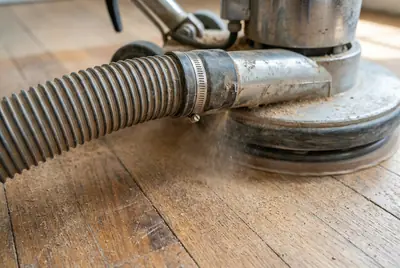
Dust stays in the hosethe pad and the vacuum are one machine
Furniture keeps its addresspieces shuffle a few feet, none leave the house
Walkable by bedtimestocking feet that evening, shoes the next day
Priced by the square footin writing before a single cord is plugged in

Revitalizing your worn wood surfaces without the dust

Refreshing your tired wood floors in Accomack County requires a modern approach that skips the heavy sanding machines. This method removes the old finish while keeping your home clean and free from invasive dust clouds. You can transform the look of your living space quickly and affordably by reaching out to local pros for a free estimate today.

Understanding the process of surface renewal

Renewing your timber floor involves a specialized process that buffs the top layer of polyurethane. This technique carefully strips away the scuffs and scratches without removing the actual wood grain. Because you avoid deep sanding, you preserve the original thickness of your boards for many more decades of use.

Furthermore, this chemical and mechanical bonding process creates a perfect base for a fresh topcoat. That extra layer provides superior surface protection against daily foot traffic and pet claws. It also saves you a significant amount of time compared to traditional restoration methods that turn your house into a construction zone.

Why this method suits busy households

Opting for this dust-free route means you never have to move all your heavy furniture out of the room. You can often walk on your renovated boards just a few hours after the job finishes. That convenience makes it an ideal solution for anyone living in the historic neighborhoods around here.

Additionally, this approach avoids the airborne particulates that often trigger allergies for you or your family members. The lack of sawdust buildup keeps your air quality high while the work happens. Since the process is less labor-intensive, it remains a budget-friendly option for maintaining the beauty of your home.

Checking for the right professional qualities

Selecting the right person for the task requires you to look for specific signs of professional care. You should always ask if the contractor carries current insurance to cover any accidental property damage. It helps to verify they understand how to apply high-quality sealants properly for a long-lasting shine.

Table 1: Key considerations for your floor project

FeaturePrimary Benefit
Dust-free technologyKeeps your home air clean
No deep sandingPreserves your floor thickness
Rapid curing timesAllows for quick foot traffic
Environmentally safeProtects your indoor health

Beyond these basics, you want someone who knows local building trends and specific flooring types common in Virginia. A skilled individual will examine your boards first to ensure the surface is not too damaged for this light method. That honest assessment gives you peace of mind before you commit to any labor.

Achieving the perfect finish

Applying a new coat requires steady hands to avoid bubbles or uneven streaks on the wood. You get a beautiful result that brings out the natural glow of the timber without the smell of old dust. This upgrade boosts your home value and adds a sense of visual harmony to every single room.

Because you are avoiding a full sanding, you keep the structural integrity of your floors fully intact. That durability means you can enjoy a fresh look while keeping your maintenance costs very low. If you are ready to see a major change, request a free quote from a pro in this region to get your project moving.

Maintaining your updated investment

Keeping your floors clean after the treatment involves simple habits that extend the life of your new finish. You should use felt pads under chair legs to prevent future scratches from appearing on the surface. That small habit protects your wood from unnecessary wear and keeps it looking brand new.

Likewise, you can maintain the sheen consistency by using ph-neutral cleaners designed specifically for sealed wood surfaces. These products strip away dirt without harming the new layer you just had applied. If you follow these simple care steps, you will enjoy a high level of satisfaction from your investment for many years.

Taking the next step for your home

Getting started is easy when you reach out to a local professional to discuss your specific needs. You simply need to provide details about the square footage and the condition of your current boards. By sharing this information, you get a clear and accurate estimate for the service.

Whether you want a matte finish or a high-gloss glow, the right pro brings the necessary tools to make it happen. You deserve a home that feels updated and fresh without the usual mess of renovation. Click here to describe your project and obtain your free quote from a reliable professional in the area today.

How sandless actually works

Three moves, in this order, in one visit. The whole trick is that the abrasion is gentle and the extraction is immediate.

An abrasion kept on a short leash

1. An abrasion kept on a short leash

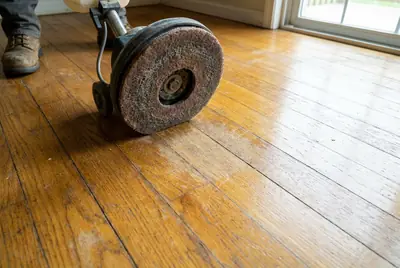
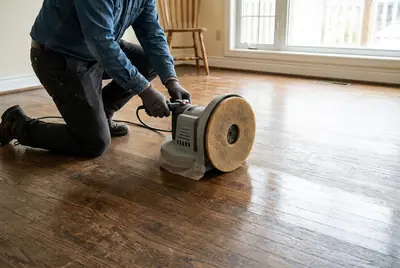
A slow orbital pad, dressed with fine screens, works only the worn finish layer. It never chews down to raw wood the way a drum sander must, which is exactly why the boards keep their thickness and the house keeps its calm.

Extraction at the point of contact

2. Extraction at the point of contact

A sealed shroud hugs the pad and a vacuum pulls every particle away the instant it exists. Nothing drifts to the bookshelves, nothing settles in the vents, and the wipe-down afterwards takes minutes, not a weekend.

A fresh wear layer to lock it in

3. A fresh wear layer to lock it in

Once the surface is keyed and spotless, a new coat of waterborne finish goes down and bonds to the old one. The shine you get is not polish sitting on top of tired wood, it is a real finish layer with years in it.

The honest limits of skipping the sander

Sandless refinishing renews the finish, not the wood underneath it. That sentence decides everything, so we put it up front. When your floor needs the full sanding treatment, we say so at the look and you keep your money for the right job.

What the floor showsCan sandless fix it?What we tell you at the look
Scratches and scuffs that live in the finishYesThe pad erases them with the old wear layer and the new coat leaves an even sheen. This is the job sandless was born for.
A gouge that goes through to bare woodNoA recoat will seal it, not erase it. Cutting it out takes a full sanding down to raw wood; you hear that from us on sight, not a shine sold over a scar.
Gray or cupped boards from old water damageNoWood that has gone gray has lost its surface fibers. No finish revives them. Those boards need a full resand, sometimes replacement, and honesty about it costs you nothing.
A waxed or oiled floorWe test firstWax and some oils refuse to let a new finish bond. A small adhesion patch in a closet corner settles the question before anyone commits to a whole room.

Roughly four floors in five that we look at qualify. The fifth gets a straight answer and a handshake, because a crew that promises miracles over dead wood is the reason this trade has a reputation to repair.

The work, framed

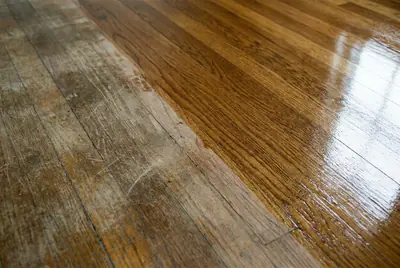
The same hardwood boards before and after a sandless refresh
Same boards, one day apart The left half is the floor we met in the morning. The right half is what the family walked on that evening.
The screen between passes
The screen between passes Fine mesh screens, swapped often, so the cut stays even from the first room to the last.
The pad that replaces the sander
The pad that replaces the sander Wide, slow and forgiving. It cannot dig a trench in your floor even if you asked it to.
The hose that eats the evidence
The hose that eats the evidence Sealed extraction from the first pass to the last. White glove on the mantel afterwards.
The coat going down
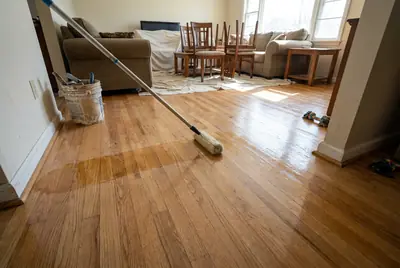
The coat going down Waterborne finish, cut in at the edges and rolled tight. Low odor, honest depth.
Handover before dinner
Handover before dinner The crew walks you across your own floor in socks, hands over the care sheet and closes the door on a house that smells like nothing happened.

One day, start to finish

  1. The call, then the look

    One call to (888) 217-5291 books it. Then twenty minutes at your place. We read the finish, run a moisture meter over the suspect spots, rub an adhesion patch where the sun cannot see it, and measure the rooms. You get one per square foot price in writing before we leave the driveway.

  2. The one-day pass

    The crew arrives in the morning and works the house in halves: furniture slides to one side, pad and vacuum make their passes, the coat goes down, then the halves trade places. Most homes are done between breakfast and late afternoon.

  3. The quiet evening

    The finish needs a still house more than it needs anything from you. Socks are fine that evening, furniture glides back on felt the next day, and area rugs take a week off while the coat hardens all the way through.

What a square foot of shine costs

The jobUsual bracketWhat sits inside it
Shine refresh, one coat$1.25 - $2.00 per sq ftThe classic: screen the old finish, capture the dust, lay one fresh coat.
Two coats on a tired floor$1.75 - $2.75 per sq ftWhen traffic lanes have worn thin, a second coat rebuilds the wear layer.
Deep clean and recoat$2.25 - $3.50 per sq ftEmbedded grime scrubbed out first, then the screen and the new finish.
Small job minimum$350 - $500 flatOne room or a hallway still books a full crew and a full setup.

Species, wear and how much furniture rides along move the figure inside those brackets. The number you sign is the number from the written quote, measured at the look. Hearing it commits you to nothing.

Same evening, same furniture

Here is the part people double-check on the phone. No, you do not empty the room, and no, you do not book a hotel. The crew slides each piece a few feet on cloth gliders, works the exposed half, and slides everything back once the first stretch can take the weight. The china stays in the cabinet the whole time, because nothing in the house vibrates hard enough to rattle it.

The finish we lay is waterborne. It smells faintly of nothing much for an afternoon, the way a freshly mopped kitchen does, and the smell is gone by the time you cook dinner. Windows cracked for an hour is plenty. Nobody sleeps at grandma's over it.

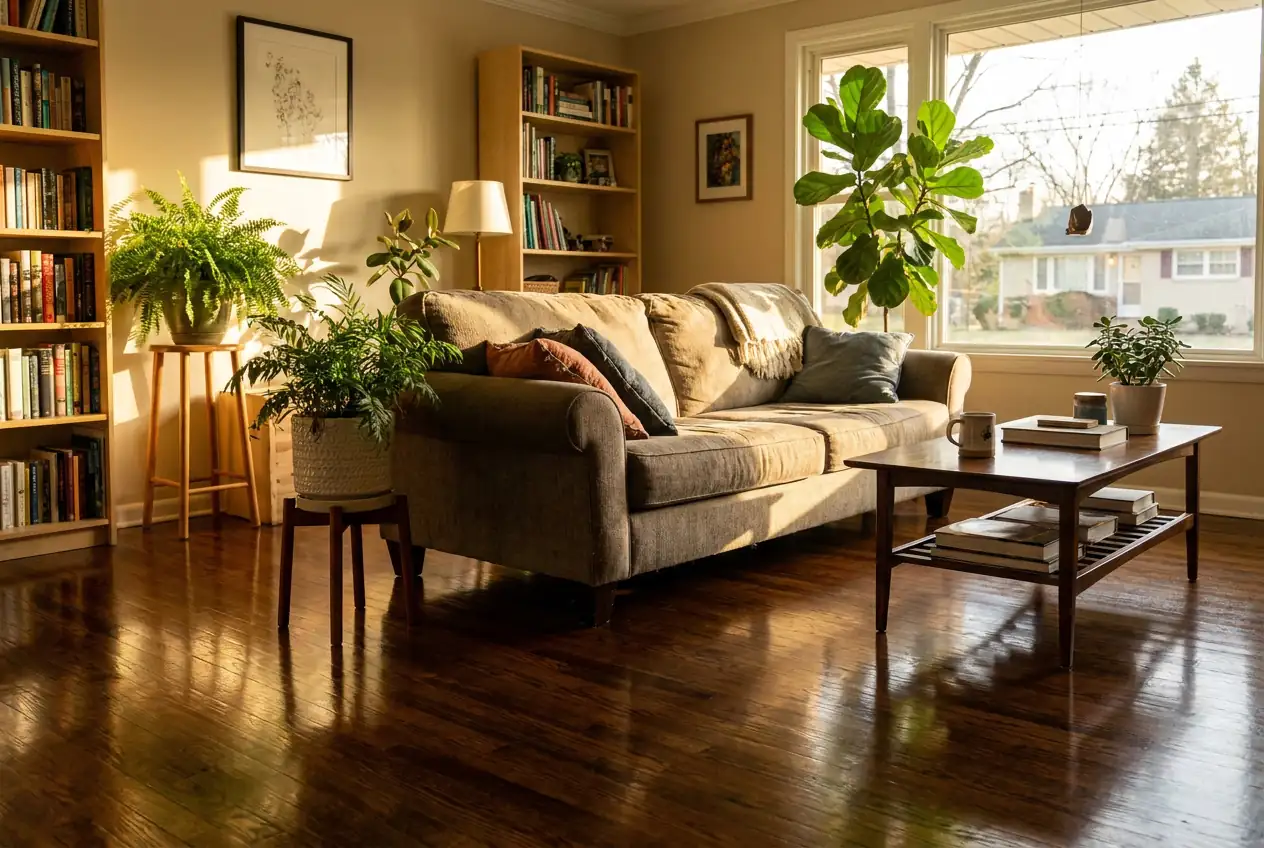
By evening the surface takes socks. By the next day it takes shoes, chairs and the dog. Felt pads go under the furniture feet as we set them back, the care sheet goes on the counter, and the only trace we leave is the part you wanted: a floor that looks like it remembers being new.

A refreshed hardwood floor catching the evening light with the furniture back in place

Asked before the furniture moves

Is it truly dust-free, or just less dusty?

The honest version: the pad produces fine particles and the sealed vacuum swallows them at the source, so what reaches the room is close to nothing. You will not find powder on the windowsills or in the vents. We still run a wipe cloth over nearby surfaces before leaving, and it comes up nearly clean.

Do we move out, or empty the rooms?

Neither. The crew shuffles furniture zone by zone and puts it all back on felt pads. You lose the use of the floor for the working day and walk it in socks that same evening. Beds stay made, cabinets stay full, life barely notices.

How soon can we walk, and when do the rugs return?

Socks the same evening, shoes and furniture the next day, area rugs after about a week. The coat keeps hardening under your feet for several days, which is why the rugs go last.

What if our floor is too far gone for sandless?

Then you hear it from us at the look, plainly. Gouges to bare wood, gray boards and deep cupping call for a full sanding, and a fresh coat over them would be a shine on borrowed time. About one floor in five we visit gets that answer, along with a fair description of what the bigger job involves.

Does it work on engineered wood and old floors?

Usually better than sanding does. Engineered boards carry a thin wear veneer that a drum sander eats through, while our pad only dresses the finish. Old solid floors that have been sanded many times before are the same story: no thickness lost, no risk of nailheads surfacing.

How long does the new shine last?

Three to five years in a busy household before the next refresh makes sense, longer in quiet rooms. The pleasant math is that a floor can be refreshed this way again and again, since no wood is removed, while each full sanding spends board thickness you never get back.

Streets we reach around Accomack County

The map shows the lay of the land; the lists further down name every community a crew can reach from here with the pad still warm.

Shine by shine through Accomack County

Farther out across Virginia

One quiet day between this floor and the way it used to look.

Call (888) 217-5291